
Skin Mesotherapy, Filler, and Botox Treatments
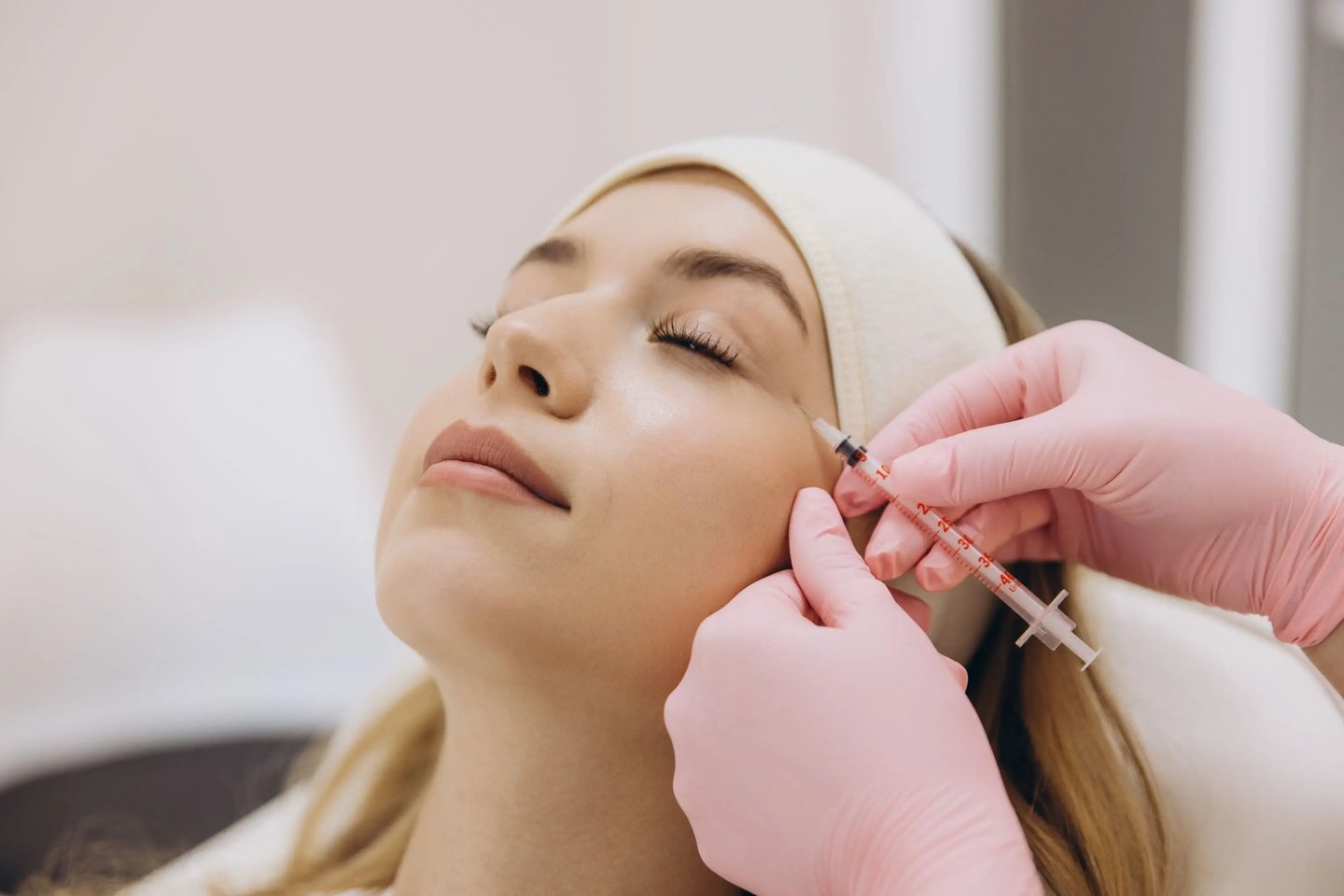
Maintaining a youthful, healthy-looking skin requires increasing the skin’s moisture retention capacity, restoring volume lost to gravity and the breakdown of fat pads, and controlling dynamic wrinkles caused by excessive contraction of facial muscles. Mesotherapy, dermal fillers, and Botox treatments—which address these three fundamental needs—are not alternatives to one another; rather, they are complementary treatments that act on different layers of the skin (the epidermis, dermis, subcutaneous fat, and muscle layer). Since all these procedures involve microinjections, they must be performed by medical specialists with a thorough understanding of facial anatomy (particularly the course of blood vessels and nerves) under sterile clinical conditions.
Application Methods and Biological Effects
Skin Mesotherapy (Youth Injection / Mesolift): This procedure involves the direct injection of a cocktail of pure hyaluronic acid, antioxidants, vitamins (A, C, E), amino acids, and peptides—all of which the skin needs to regain moisture, vitality, and elasticity—into the dermis (middle layer of the skin) using a microneedling technique. This procedure triggers new collagen production by mechanically and chemically stimulating fibroblasts, the primary cells of connective tissue. It eliminates dullness, smooths out fine lines, and prevents loss of elasticity.
Dermal Fillers (Volumizing and Contouring): They are used to correct the sagging and drooping caused by the loss of facial bone structure and the depletion of deep fat pads that occur with aging. Today, the safest filler is hyaluronic acid, which is naturally found in the body’s tissues and has an extremely high capacity for water retention. It is injected into the deep layers of the skin or directly into the bone to enhance the cheekbones, sharpen the jawline, fill in nasolabial (smile) lines, and increase lip volume.
Botox (Botulinum Toxin Treatment): Contrary to popular belief, it is not snake venom, but a purified protein (neurotoxin) derived from the Clostridium botulinum bacterium. Botox temporarily blocks the release of a chemical messenger called acetylcholine from nerve endings in the muscle tissue where it is injected. By reducing the muscle’s contractile force, it prevents the overlying skin from creasing and thus prevents the formation of permanent lines on the forehead, around the eyes (crow’s feet), and between the eyebrows. Its effect is temporary (on average 4–6 months) and does not cause permanent damage to the muscle tissue.
Clinical Warnings and Life-Threatening Risks
Intravascular Filler Injection (Vascular Occlusion): The most serious and feared complication in filler procedures is the accidental injection of the filler material into a facial artery or the complete blockage of blood flow due to excessive external pressure applied to the artery. If this situation is not addressed immediately, the tissues in the affected area may become oxygen-deprived (necrosis), and if it occurs in the blood vessels supplying the eye, it can lead to permanent blindness. For this reason, filler procedures must be performed exclusively by physicians who are proficient with cannulas (blunt-tipped needles) and have a thorough understanding of anatomy; the hyaluronidase enzyme, which instantly dissolves the filler, must be kept on hand in the clinic at all times for emergencies.
"Drooping Eyelid" (Ptosis) After Botox: This occurs when Botox is injected at the wrong dose or into the wrong anatomical site, or when the medication diffuses (seeps) into adjacent muscles due to the patient rubbing their face immediately after the procedure. If the muscle that lifts the upper eyelid becomes paralyzed, the eyelid may droop (ptosis). Although this condition is temporary, it negatively affects the patient’s quality of life for weeks.
A Departure from Naturalness ("Overfilled Face" Syndrome): Constant and uncontrolled use of fillers erases the face’s natural anatomical contours and facial expressions, resulting in an artificial, puffy, and expressionless appearance known as “pillow face.” The golden rule in aesthetic procedures is to stay within the patient’s anatomical limits, using a “less is more” approach.
Important License and Product Notice: The medical aesthetics market is rife with procedures performed by non-physicians at unlicensed hair salons or beauty salons—often referred to as “back-alley” establishments. These places frequently use cheap, low-quality filler and Botox products of Chinese origin that lack approval from the Ministry of Health and can lead to reactions to foreign bodies (granulomas) and irreversible infections. To avoid putting your health at risk, you must ensure that the person performing the procedure is a licensed medical doctor and that the products are opened right in front of you from their original packaging.
When Should You See a Medical Aesthetics Specialist?
To slow down the aging process of your skin and address existing issues, you can consult a specialist in the following situations:
When you notice fine lines beginning to form on your forehead and around your eyes, even when you’re not making facial expressions (the best time for Botox is to take preventive action before the lines become permanent)
When you notice excessive dryness, dullness, lack of moisture, and fine wrinkles on your skin (for mesotherapy sessions)
When you look in the mirror and notice sagging on your face, a tired and sleep-deprived expression, or hollows under your eyes (for filler treatments to restore volume and provide a lifting effect)
If you experience jaw clenching (bruxism), to prevent tooth wear and refine the facial contour (for Masseter/Jaw Botox)
When you notice structural or age-related volume loss and asymmetry in your lips
Important Note: Medical aesthetic procedures should be considered as a whole. Even a perfectly administered Botox treatment alone cannot achieve the desired rejuvenating effect on dry, sagging skin. First hydrating the skin and improving its quality through mesotherapy, then smoothing out wrinkles with Botox, and finally providing support with fillers where needed yields the most natural and long-lasting results. Please contact our clinic to schedule a personalized treatment plan.
Merve Medical Center
Reliable and accessible healthcare in Istanbul since 1992..
CHAPTERS
Home
Our Units
About
Contact
CONTACT
info@mervetipmerkezi.com
+90 212 537 77 79
İstanbul, Türkiye
7/24 Emergency & Outpatient Services
© 2026 Merve Medical Center - Uninterrupted medical care in Istanbul since 1992.
Editor: Dr. Gökhan Çetinkaya Web Design: Nahit Demir Last Updated: September 26, 2026
CLINICAL EXPERTISE AND TRUST